

Nel frastuono della mercificazione artistica e della narrazione storica univoca, l’opera di Rossana Borzelli si staglia come un atto di giustizia e rievocazione. Il suo progetto “SAGOME – Storie di artiste ignorate” non è una mera esposizione, ma una vera e propria seduta medianica in cui l’artista, quale scriba e testimone, evoca le presenze negate dall’archivio patriarcale. Borzelli non si limita a riscoprire, ma offre una “venuta spettrale” a figure la cui genialità è stata sistematicamente taciuta, derubata o patologizzata. La sua pratica è il “filo spinato nei vostri salotti” (cit. Maria Desiderio).
L’artista lavora sull’ossimoro materico. L’utilizzo della tecnica mista su ferro non è casuale: il ferro, rigido, industriale, simbolo della memoria incisa e della permanenza storica, diventa il telaio esistenziale su cui si depositano le fragili, stratificate tracce della memoria. La sagoma, o silhouette, diviene in questo contesto la concretizzazione dell’astratto, una forma percepibile dell’assenza, riflettendo un approccio che ben si allinea alle ricerche sul vuoto e sulla percezione dell’immateriale. L’artista trasforma il supporto in un monumento alla resistenza di queste identità.
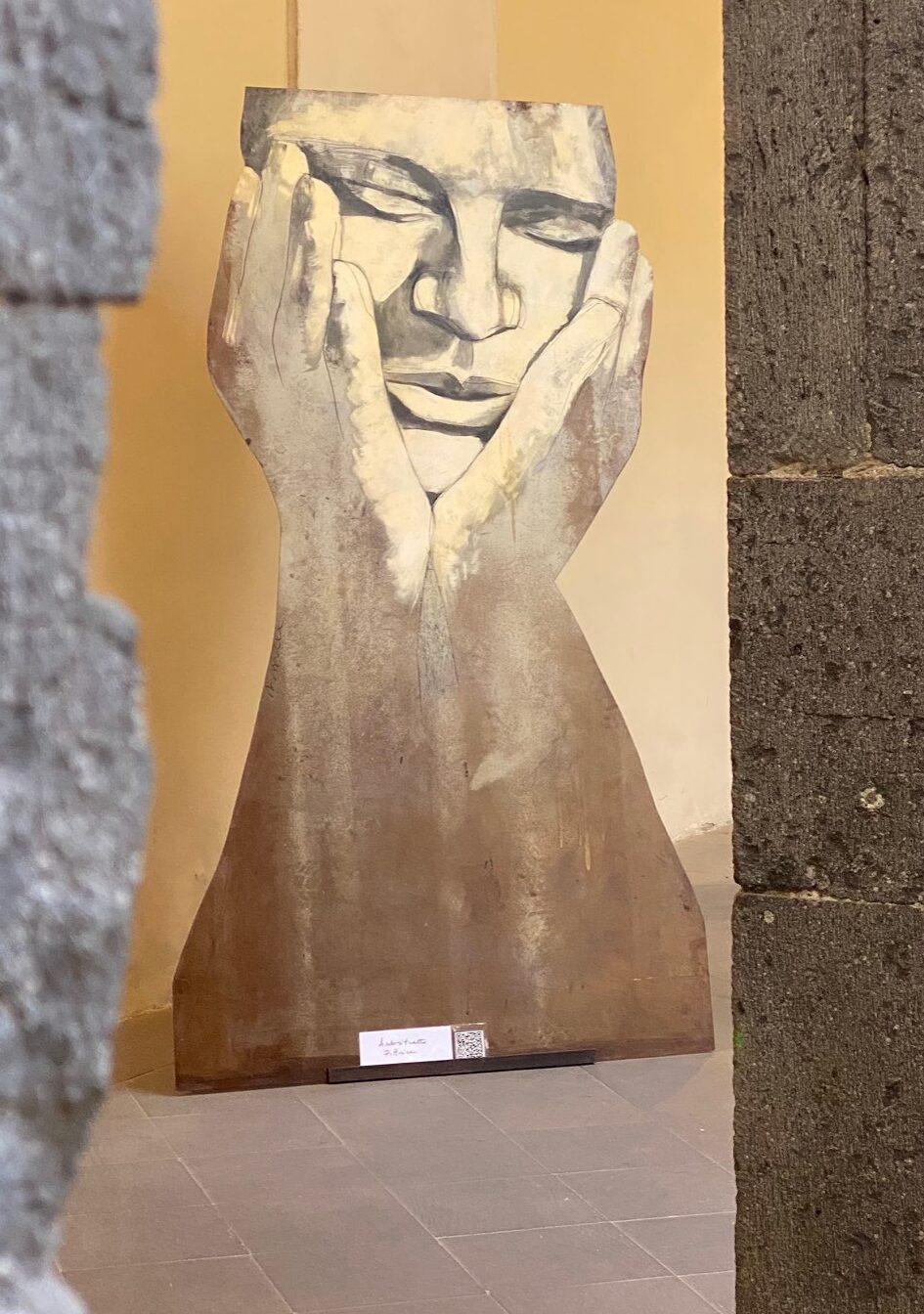
L’opera di Borzelli ci costringe a confrontarci con una domanda etica: cosa significa esistere come traccia nell’assenza? Le sue “Sagome” rappresentano la volontà di queste donne di non essere ridotte alla “musa che si suicida nel bagno”, ma di riaffermarsi come “avanguardia delle avanguardie” (cit. Maria Desiderio).
Attraverso quattro momenti esemplari tratti dal ciclo, Borzelli ricostruisce un mosaico di identità complesse, tutte unite dal destino dell’invisibilità:
Catherine Pozzi: Viene evocata la figura dell’intellettuale raffinata, la cui poetica, apprezzata dai grandi scrittori (tra cui Rilke), fu pubblicata solo post-mortem. La sua silhouette sul ferro è un monito contro la segregazione del genio femminile nell’ambito epistolare e privato, lontano dal palcoscenico pubblico.

Francesca Woodman: L’artista fotografica, figura tragica e pioniera di una nuova forma di autoritratto, viene qui cristallizzata in un gesto di autoaffermazione, un grido contro la cancellazione che lei stessa paventava: “vorrei piuttosto morire giovane, preservando ciò che è stato fatto, anziché cancellare confusamente tutte queste cose delicate” (cit. Francesca Woodman). Borzelli le restituisce la forza dell’opera contro la fragilità della vita.
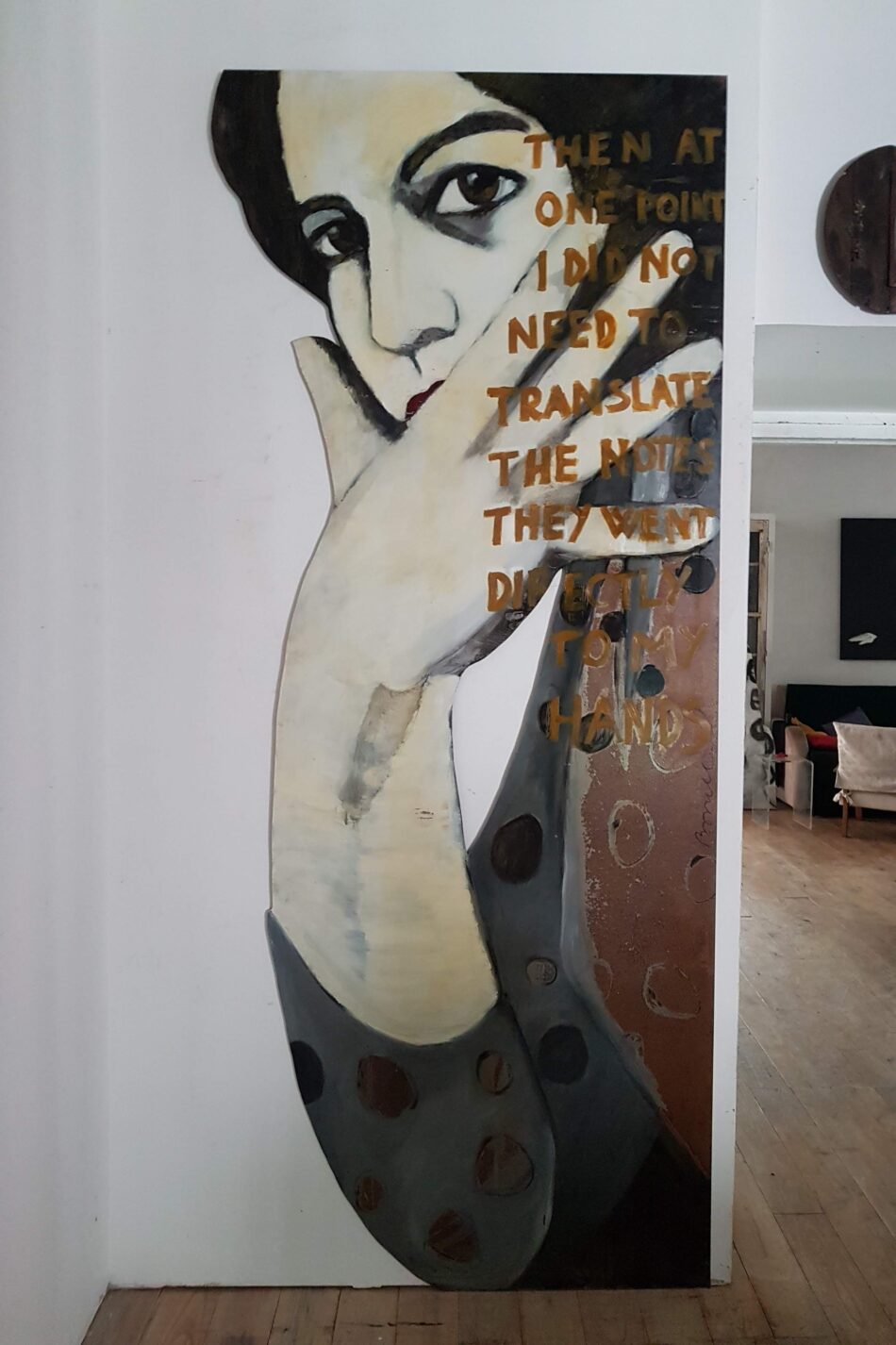
Camille Claudel: Simbolo della distruzione causata dall’invidia creativa e dalla follia indotta, la sua presenza è una denuncia viscerale del sistema che etichetta e interna il genio femminile per difendere l’ordine maschile, riducendo l’arte a una questione di genere e non di talento.
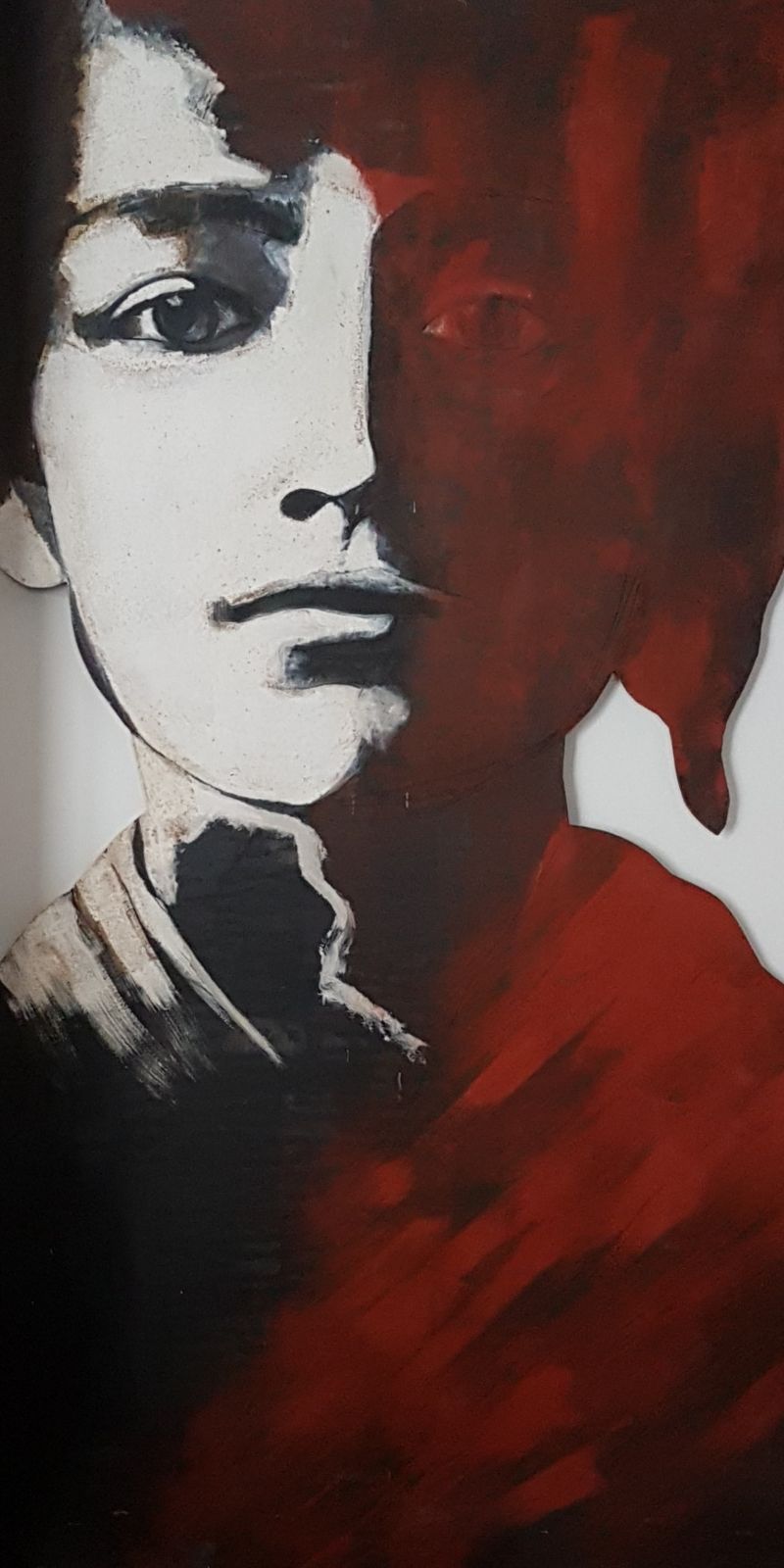
Tina Modotti: La sua figura incarna la perfetta fusione tra arte, impegno politico e vita. Borzelli ne celebra l’occhio fotografico acuto e la capacità di trasformare l’immagine in documento e denuncia sociale. È un’evocazione che celebra l’intuizione e la visione profetica, fuori da ogni tempo imposto, sottolineando come l’archivio patriarcale tenda a sminuire la valenza artistica a favore della dimensione biografica o politica.

L’artista Rossana Borzelli, in questo ciclo, non è una semplice curatrice storica, ma una psicanalista del tempo. Borzelli scuote l’inconscio collettivo, forzandoci ad accogliere queste presenze che tornano per esigere la loro parte di storia. Le “Sagome” non sono solo arte, ma un necessario riscatto spirituale per le artiste “tutte troppo indecenti, libere, pazze, maschili, irrequiete, geniali, depresse” (cit. Maria Desiderio), riaffermando il potere dell’arte di ricucire le lacerazioni del passato.
https://www.singulart.com/fr/oeuvres-d-art/rossana-borzelli-tina-modotti-764319
https://www.singulart.com/fr/oeuvres-d-art/rossana-borzelli-ritratto-di-francesca-woodman-1635280
§§§
English Version
The Spectral Return: Rossana Borzelli and the Archive of Absence
Amidst the clamor of artistic commodification and the univocal historical narrative, the work of Rossana Borzelli stands as a necessary act of justice and re-evocation. Her project “SAGOME – Storie di artiste ignorate” (SHAPES – Stories of Ignored Artists) is not a mere exhibition, but a true mediumistic séance in which the artist, as scribe and witness, evokes the presences denied by the patriarchal archive. Borzelli does not limit herself to rediscovery but offers a “spectral return” to figures whose genius was systematically silenced, stolen, or pathologized. Her practice is the “barbed wire in your parlors” (cit. Maria Desiderio).
The artist works on the material oxymoron. The use of mixed media on iron is not accidental: the iron, rigid, industrial, a symbol of inscribed memory and historical permanence, becomes the existential framework onto which the fragile, stratified traces of memory are deposited. The sagoma, or silhouette, becomes in this context the concretization of the abstract, a perceivable form of absence, reflecting an approach that aligns well with research on the void and the perception of the immaterial. The artist transforms the support into a monument to the resistance of these identities.
Borzelli’s work forces us to confront an ethical question: what does it mean to exist as a trace in the absence? Her “Shapes” represent the will of these women not to be reduced to the “muse who commits suicide in the bathroom,” but to reassert themselves as the “avant-garde of the avant-gardes.” (cit. Maria Desiderio).
Through four exemplary moments drawn from the cycle, Borzelli reconstructs a mosaic of complex identities, all united by the destiny of invisibility:
- Catherine Pozzi: The figure of the refined intellectual is evoked, whose poetry, appreciated by great writers (including Rilke), was only published post-mortem. Her silhouette on iron is a warning against the segregation of female genius in the epistolary and private sphere, far from the public stage.
- Francesca Woodman: The photographic artist, a tragic figure and pioneer of a new form of self-portraiture, is here crystallized in a gesture of self-affirmation, a cry against the erasure she herself feared: “I would rather die young, preserving what has been done, instead of confusingly canceling all these delicate things” (cit. Francesca Woodman). Borzelli restores the strength of the work against the fragility of life.
- Camille Claudel: A symbol of the destruction caused by creative envy and induced madness, her presence is a visceral denunciation of the system that labels and institutionalizes female genius to defend the male order, reducing art to a question of gender, not talent.
- Tina Modotti: Her figure embodies the perfect fusion of art, political commitment, and life. Borzelli celebrates her acute photographic eye and her ability to transform the image into document and social denunciation. This evocation celebrates intuition and prophetic vision, outside any imposed timeline, emphasizing how the patriarchal archive tends to downplay artistic value in favor of the biographical or political dimension.
The artist Rossana Borzelli, in this cycle, is not a simple historical curator, but a psychoanalyst of time. Borzelli shakes the collective unconscious, forcing us to welcome these presences that return to demand their part in history. The “Shapes” are not just art, but a necessary spiritual redemption for the artists “all too indecent, free, mad, masculine, troubled, gifted, depressed,” (cit. Maria Desiderio), reaffirming the power of art to mend the lacerations of the past.
Lascia un commento